
Oxygen saturation (SpO₂) sensors are an indispensable component in modern patient monitoring systems. They serve as the frontline indicators of hypoxemia and respiratory distress. The diversity in SpO₂ sensor designs and functionalities has evolved to accommodate a wide range of clinical settings, patient demographics, and specialized care needs. Understanding the different types of sensors used in patient monitors allows clinicians and healthcare procurement professionals to make informed decisions for optimal patient care.
Types of SpO₂ Sensors by Design
Clip-Type Finger Sensors: The Standard in Adult Monitoring
Clip-type finger sensors represent the quintessential design in SpO₂ monitoring. These sensors utilize a spring-loaded mechanism to attach securely to a patient’s fingertip, delivering accurate, real-time oxygen saturation readings. Their robust structure ensures excellent light transmission and photodetector alignment, which is vital for signal fidelity. Commonly used in adult and adolescent populations, these sensors are ideal for general wards, emergency departments, and perioperative environments. Their reusability and quick application also make them a popular choice for high-throughput clinical areas.
Soft Sensors: Comfortable and Ideal for Long-Term Use
Soft sensors are engineered with pliable materials, often silicone or thermoplastic elastomers, to conform gently to the patient’s anatomy. These sensors are tailored for continuous monitoring scenarios, such as in intensive care units (ICUs) or step-down units. Their ergonomic design minimizes pressure points and reduces the risk of skin breakdown over prolonged usage. Soft sensors also enhance patient comfort, particularly in sedated or immobile individuals, making them suitable for extended monitoring sessions.
Wrap-Around Sensors for Neonates and Pediatrics
Wrap-around SpO₂ sensors are critical for the delicate physiology of neonates and pediatric patients. Designed with gentle adhesives and ultra-flexible materials, these sensors are wrapped around a foot, wrist, or hand, ensuring secure placement without compromising skin integrity. Their compact form factor accommodates the tiny anatomy of newborns, while advanced photonics technology compensates for low perfusion states common in this population. Neonatal wrap sensors often include features like reflectance-mode capability and built-in shielding against ambient light interference.
Adhesive Sensors: Flexible and Disposable for Infection Control
Wrap-around SpO₂ sensors are critical for the delicate physiology of neonates and pediatric patients. Designed with gentle adhesives and ultra-flexible materials, these sensors are wrapped around a foot, wrist, or hand, ensuring secure placement without compromising skin integrity. Their compact form factor accommodates the tiny anatomy of newborns, while advanced photonics technology compensates for low perfusion states common in this population. Neonatal wrap sensors often include features like reflectance-mode capability and built-in shielding against ambient light interference.
Reusable vs. Disposable SpO₂ Sensors
When to Use Reusable Sensors: Cost-Efficiency and Durability
Reusable SpO₂ sensors are constructed from durable polymers and shielded cabling, designed to withstand repeated disinfection cycles and high patient volumes. Hospitals and outpatient clinics benefit from the cost-efficiency of reusables in routine monitoring. These sensors are ideal in controlled environments where patient turnover is high but infection risks are relatively manageable. Their long service life, when maintained correctly, offers an attractive return on investment over time.
The Role of Disposable Sensors in Infection Prevention
Disposable sensors play a critical role in curbing healthcare-associated infections (HAIs). By eliminating the need for reprocessing, single-use sensors reduce the potential for microbial transmission between patients. In high-risk environments—such as burn units, transplant ICUs, or during infectious disease outbreaks—disposable sensors offer an essential layer of protection. Their sterile packaging and single-patient usage model align with the most stringent hospital hygiene protocols.
Pros and Cons of Each in a Hospital Environment
Reusable sensors boast longevity, lower long-term costs, and environmental advantages. However, they require rigorous cleaning protocols, staff training, and can suffer wear over time that may degrade signal quality. Disposable sensors, while hygienic and maintenance-free, incur recurring costs and contribute to medical waste. A balanced sensor strategy—deploying disposables in high-risk areas and reusables in standard care—often yields the best clinical and economic outcomes.
Sensor Form Factors for Specialized Applications
Ear, Toe, and Forehead SpO₂ Sensors: When Fingers Aren’t an Option
Reusable sensors boast longevity, lower long-term costs, and environmental advantages. However, they require rigorous cleaning protocols, staff training, and can suffer wear over time that may degrade signal quality. Disposable sensors, while hygienic and maintenance-free, incur recurring costs and contribute to medical waste. A balanced sensor strategy—deploying disposables in high-risk areas and reusables in standard care—often yields the best clinical and economic outcomes.
Veterinary SpO₂ Sensors: Adapting Human Tech for Animal Care
SpO₂ monitoring is no longer limited to human medicine. Veterinary patient monitors use modified sensor designs to accommodate the unique anatomical structures and behaviors of animals. Tail sensors, tongue clip sensors, and flexible wrap sensors allow accurate monitoring of oxygenation in pets and livestock. These sensors must tolerate movement and varied fur or skin textures while ensuring comfort and safety for animal patients.
Multi-Site Sensors: Increasing Versatility and Redundancy
SpO₂ monitoring is no longer limited to human medicine. Veterinary patient monitors use modified sensor designs to accommodate the unique anatomical structures and behaviors of animals. Tail sensors, tongue clip sensors, and flexible wrap sensors allow accurate monitoring of oxygenation in pets and livestock. These sensors must tolerate movement and varied fur or skin textures while ensuring comfort and safety for animal patients.
Explore Medke’s Full Range of SpO₂ Sensors for Patient Monitors
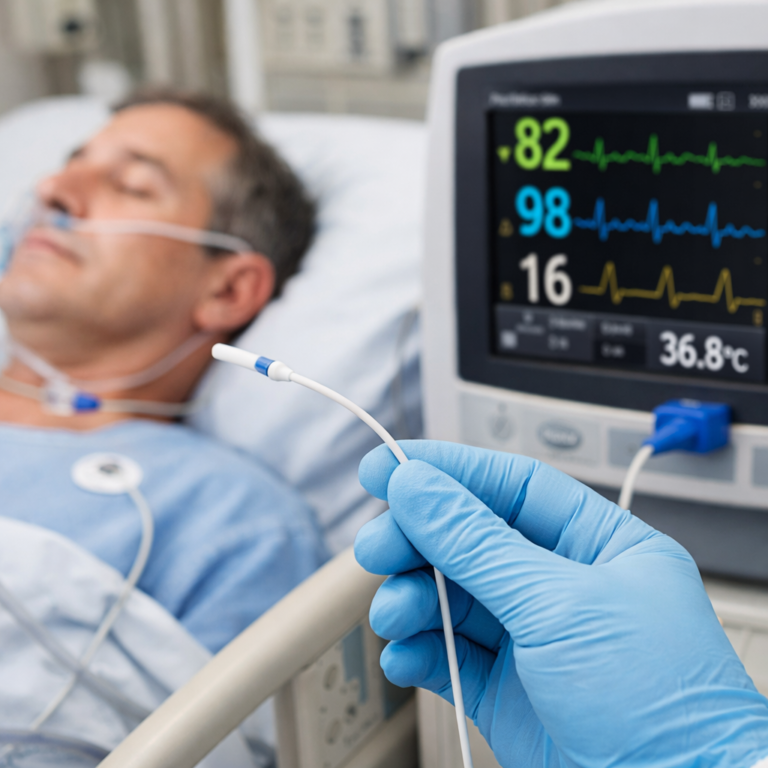
Medke offers a comprehensive portfolio of SpO₂ sensors compatible with leading patient monitor brands, including Masimo, Nellcor, and OEM-compatible designs. From durable reusable clip sensors to soft neonatal wraps and disposable adhesive options, our range is engineered to meet the rigorous demands of today’s clinical environments.

 English
  German
  Spanish
  Italian
  French
  Portuguese
  Korean
  Russian
  Arabic
  Danish
  Swedish
  Polish
  Japanese