
In modern anesthesia management, accurately monitoring a patient’s level of consciousness is critical for both safety and recovery. BIS (Bispectral Index) monitoring is an advanced technology that helps clinicians measure the depth of anesthesia using brain electrical activity.
By converting complex EEG signals into a simple numerical index, BIS monitoring allows anesthesiologists to make more precise decisions about sedation levels during surgery and critical care.
What Is the BIS Index?
The Bispectral Index (BIS) is a numerical scale derived from electroencephalogram (EEG) signals that reflects a patient’s level of consciousness.
The BIS value ranges from 0 to 100:
| BIS Value | Patient State |
| 100 | Fully awake |
| 80–100 | Light sedation |
| 60–80 | Moderate sedation |
| 40–60 | General anesthesia (recommended range for surgery) |
| 0 | No detectable brain activity |
A lower BIS value indicates deeper anesthesia, while a higher value suggests the patient is more awake.
This real-time monitoring helps clinicians avoid both under-sedation (risk of intraoperative awareness) and over-sedation (risk of delayed recovery or complications).
How BIS Monitoring Works
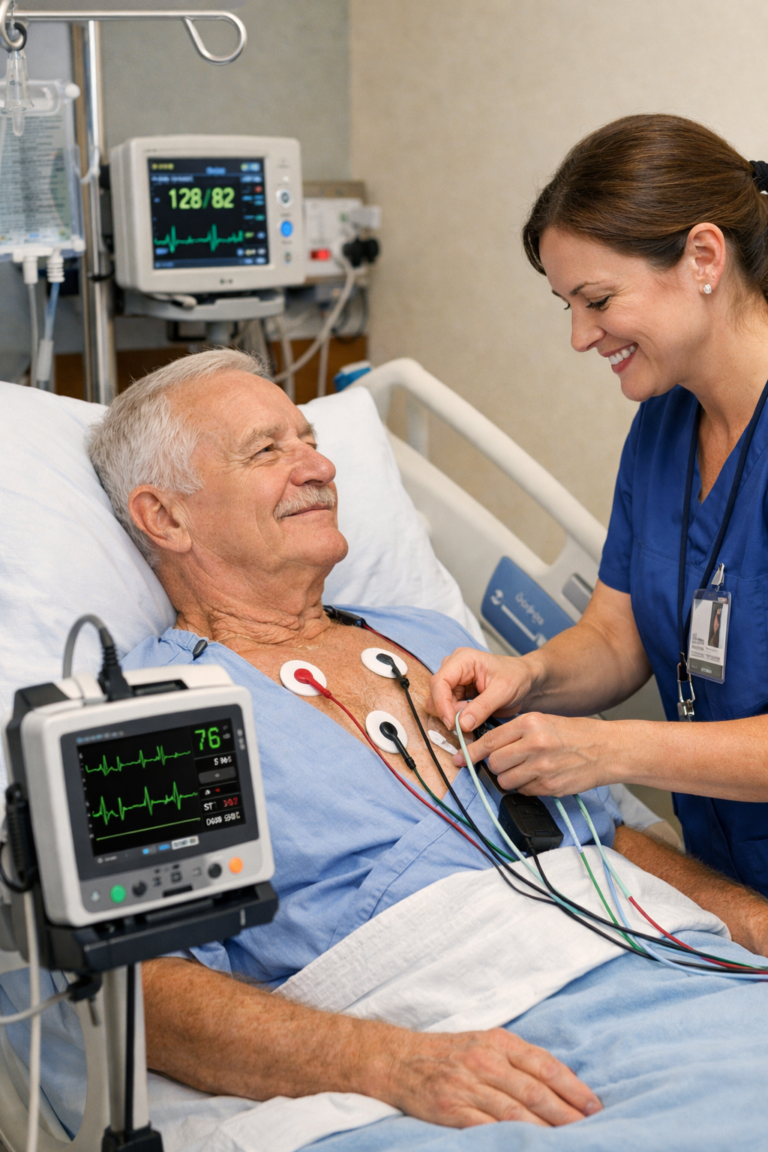
BIS technology analyzes brain activity using EEG signals captured through electrodes placed on the patient’s forehead.
The monitoring process includes three main steps:
1. EEG Signal Acquisition
Brain cells communicate through electrical impulses. EEG sensors capture these small electrical signals from the scalp.
2. Advanced Signal Analysis
BIS algorithms analyze EEG signals based on multiple parameters such as:
- Frequency patterns
- Signal power distribution
- Bispectral analysis
These features provide insights into the patient’s neurological state.
3. Index Conversion
The analyzed data is then converted into a single BIS value, making it easy for clinicians to interpret the patient’s level of consciousness in real time.
Clinical Applications of BIS Monitoring
BIS monitoring is widely used in several medical settings.
1. Anesthesia Depth Management
The primary use of BIS monitoring is during surgery to help anesthesiologists:
- Optimize anesthetic dosage
- Prevent intraoperative awareness
- Reduce excessive anesthesia
Maintaining a BIS value between 40 and 60 is typically recommended during general anesthesia.
2. Intensive Care Unit (ICU) Sedation
In critical care environments, BIS monitoring helps physicians manage sedation for ventilated patients and those requiring prolonged sedation.
3. Post-Anesthesia Recovery Assessment
BIS data can also help predict emergence time from anesthesia, allowing better management of postoperative recovery.
Components of a BIS Monitoring System
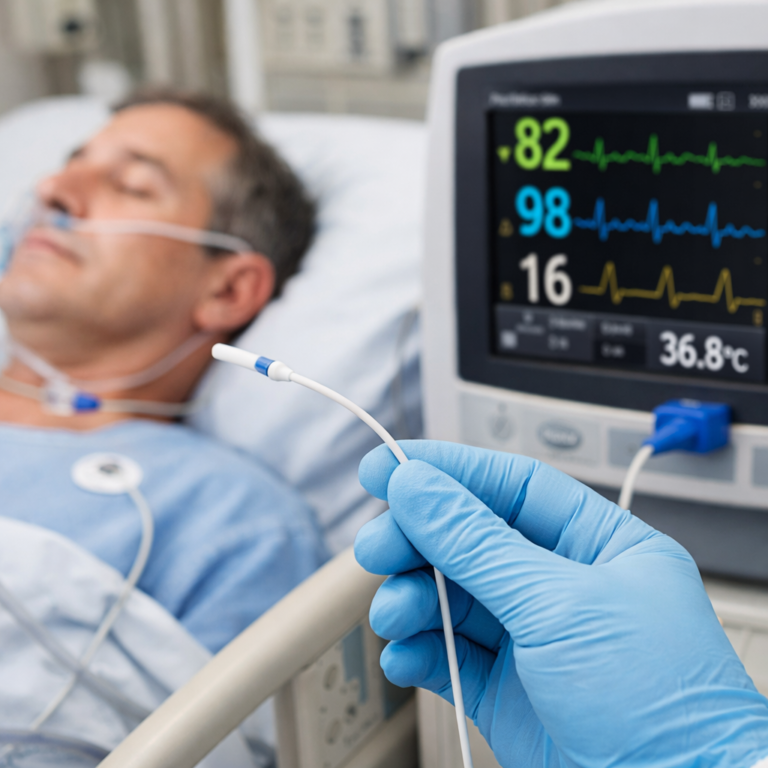
A complete BIS monitoring setup typically includes several hardware components.
1. BIS Monitor
The BIS monitor processes EEG signals and displays:
- BIS index values
- Raw EEG waveforms
- Trend graphs
- Signal quality indicators (SQI)
- Electromyography (EMG)
- Suppression ratio (SR)
These indicators help clinicians assess both signal quality and patient status.
2. BIS Module
Many multi-parameter patient monitors support BIS measurement through a plug-in BIS module.
This allows hospitals to integrate BIS monitoring into existing monitoring platforms used in operating rooms and ICUs.
3. Digital Signal Converter (BISx)
The digital signal converter acts as an intermediary between sensors and the monitor.
Its functions include:
- Converting analog EEG signals into digital data
- Filtering environmental noise
- Performing initial signal processing
4. Patient Interface Cable (PIC)
The patient interface cable connects the digital signal converter to the BIS sensor attached to the patient.
It ensures reliable signal transmission.
5. Host Adapter Cable
This cable connects the BIS converter to compatible bedside monitoring systems.
Types of BIS Sensors
BIS monitoring requires disposable EEG sensors that attach to the patient’s forehead.
Several types are commonly used depending on clinical needs.
BIS Quatro Sensor
- Standard four-electrode design
- Most commonly used in adult surgical procedures
BIS Extend Sensor
- Designed for long-term monitoring
- Often used in ICU environments
BIS Pediatric Sensor
- Specially designed for children aged 4 years and older
BIS Bilateral Sensor
- Measures brain activity from both hemispheres
- Useful for neurological comparisons
Market Insights: BIS Sensors
Market analysis shows a growing global interest in BIS monitoring technology.
Search trend data over the past five years indicates increasing demand, especially since late 2025, when search interest rose significantly.
Regions with High Search Demand
- Europe (highest demand)
- Latin America
- North America
This trend reflects the growing adoption of advanced anesthesia monitoring technologies worldwide.
Price Comparison: Original vs Compatible BIS Sensors
Market research shows a significant price difference between original brand sensors and compatible alternatives.
Original BIS Sensors
| Sensor Type | Packaging | Price per Box | Unit Price |
| BIS Quatro | 25 pcs | $700 – $1200 | $28 – $45 |
| BIS Pediatric | 25 pcs | $725 – $980 | – |
| BIS Bilateral | 10 pcs | $550 – $600 | $55 – $60 |
| BIS Extend | 25 pcs | $900 – $1200 | – |
Compatible Sensors
Compatible BIS sensors are typically priced at only one-third to one-quarter of the original products, making them an attractive option for hospitals seeking cost-effective solutions.
Conclusion
BIS monitoring has become an essential tool in modern anesthesia and critical care. By transforming complex EEG data into a simple numerical index, it enables clinicians to maintain optimal sedation levels and improve patient safety.
With the increasing global demand for anesthesia monitoring technologies, BIS sensors and compatible accessories continue to play a key role in surgical and ICU environments.

 English
  German
  Spanish
  Italian
  French
  Portuguese
  Korean
  Russian
  Arabic
  Danish
  Swedish
  Polish
  Japanese